More Human Than Human?
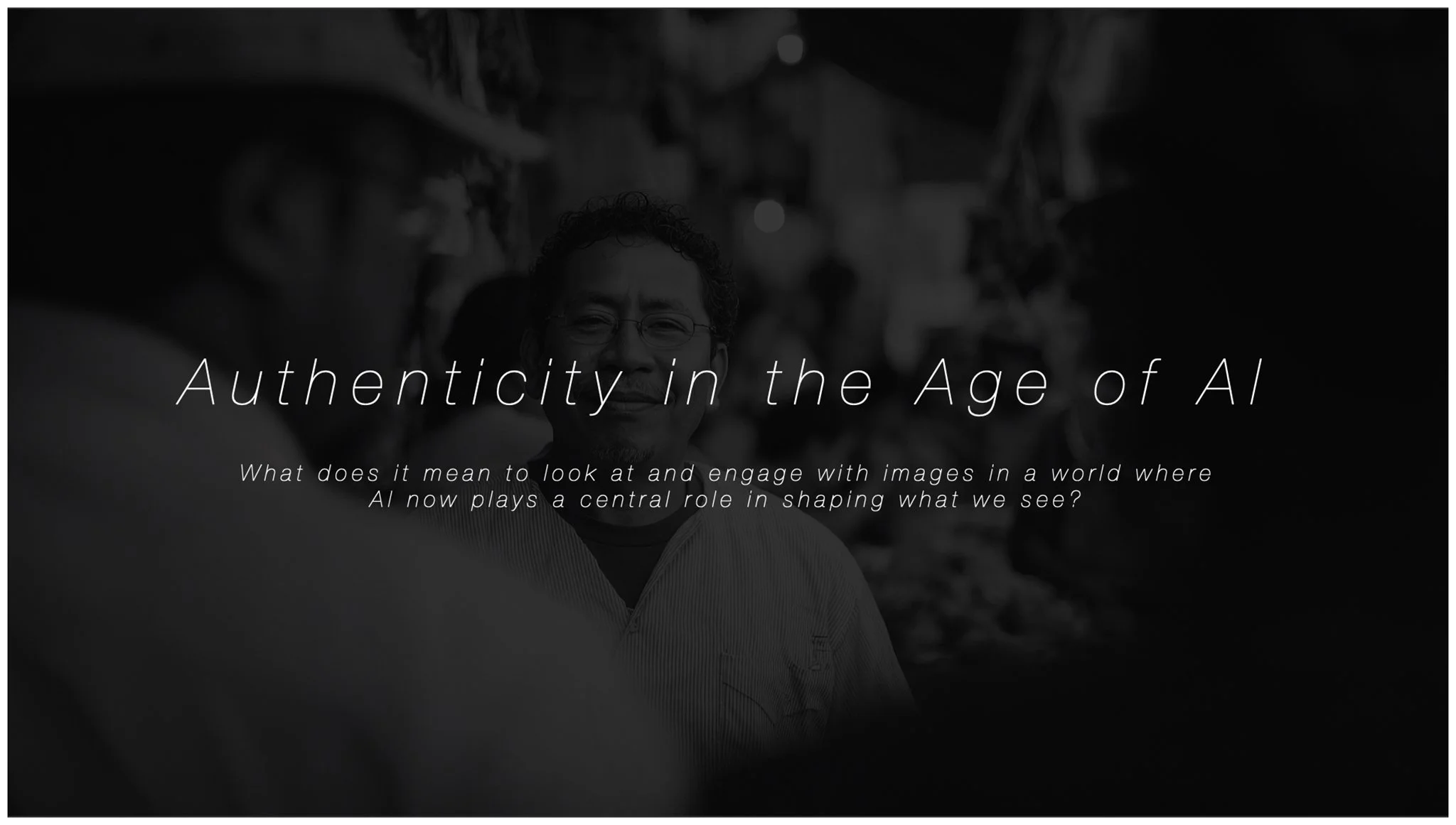
The Faces of Mexico emerges from a growing uncertainty about what it means to look at a photograph now. We are surrounded by images that feel convincing, polished, emotionally legible, and yet increasingly unmoored from lived experience. In this project, portraiture becomes a site of friction rather than reassurance. Some of the faces are photographed. Some are generated. All are presented with the same visual seriousness. The work resists explanation on first encounter, asking viewers to linger, to question their instincts, to sit with doubt. Authenticity here is not guaranteed by process or provenance, but tested through attention. What do you believe you are seeing, and why?
As this work comes to Xposure International Photography Festival, that question becomes more pointed. The project is not a critique of AI as a tool, nor a celebration of its novelty. It is an examination of how perception itself is changing. In an era where images can be endlessly produced, refined, and circulated, the responsibility shifts toward the viewer. Meaning is no longer delivered. It is negotiated. The Faces of Mexico asks for a slower kind of looking, one that acknowledges uncertainty as part of the encounter. In that space between recognition and suspicion, something human still persists. That tension is the work.
You can experience The Faces of Mexico: A Study in Truth and Perception in person at Xposure International Photography Festival 2026 in Sharjah, running 29 January to 4 February 2026 at Aljada. Step into the exhibition with that central question still hanging in the air, not as a tagline but as a challenge: to give these portraits your time, to let your certainty wobble a little, and to notice what happens when a photograph no longer acts like proof but like a mirror. The work does not ask you to pick sides. It asks you to look carefully, in a space built for looking.